
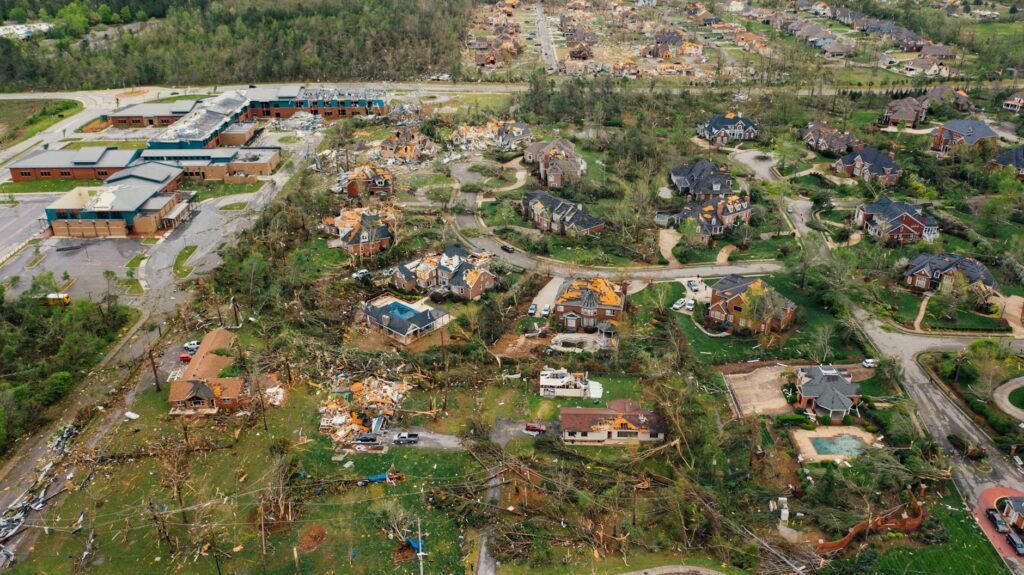
If you are staring at stains on your ceiling or shingles in your yard after a Pocono storm, you are probably asking yourself a simple question with a complicated answer: is this storm damage or just normal roof wear? Understanding the difference is central to deciding whether you truly need a full roof replacement, a targeted repair, or simply a routine inspection.
In the Poconos, your roof faces four seasons of stress. Heavy snow loads, ice, summer hail, severe thunderstorms, and strong winds all interact with the slow, predictable aging that happens over decades. When you can separate sudden storm damage from gradual wear, you protect your home, avoid premature replacement, and give your insurance company accurate information.
TLDR: How to spot the difference
You can use this quick guide as a starting point before calling a roofer or your insurer.
- Normal roof wear develops slowly and evenly across the roof surface over many years
- Storm damage appears suddenly, often after a specific event, and looks uneven or directional
- Normal wear signs: faded shingles, small granule loss, slight curling, general dull look
- Storm damage signs: missing or torn shingles, hail dents, exposed underlayment, new leaks
- Insurance usually covers sudden storm damage, not gradual aging or lack of maintenance
- In the Poconos, schedule roof inspections after major hail, high wind, or heavy ice events
If you suspect your roof might be nearing the end of its life for any reason, you can also review how to know if you need a roof replacement in more detail.
How normal roof wear looks on a Pocono home
Normal roof wear is similar to how your car ages if you drive it carefully for many years. There are no single dramatic incidents, just accumulated exposure to sun, temperature swings, rain, and snow.
Across the industry, normal wear is characterized as even and gradual, typically affecting the entire roof or large sections at roughly the same pace. Over time, ultraviolet light, thermal expansion and contraction, and moisture gradually break down asphalt shingles, even if there is never a major storm event in a given year. You mainly see slow and consistent change rather than anything sudden or localized Top Flight Contracting.
For Pocono homes, this gradual process is accelerated by:
- Intense summer sun on south and west facing slopes
- Freeze thaw cycles in late fall and early spring
- Persistent moisture and leaf buildup in shaded areas
Typical signs of normal wear include:
- A more faded, dull look compared to when the roof was new
- Minor, uniform granule loss, often visible in gutters and downspouts as a sandy residue Dior Construction
- Slight curling or cupping around shingle edges
- Occasional cracked or missing shingles without a clear trigger event
According to multiple roofing guides, this kind of gradual change is expected as a roof ages and does not automatically indicate that you need an immediate full replacement Roofing Center. Many asphalt shingle roofs are designed for about 20 to 25 years of service with proper maintenance, after which they become more susceptible to moisture problems and damage from storms Dior Construction.
What true storm damage looks like
Storm damage is different because it has a clear cause, timing, and pattern. Instead of a slow fade, you see changes that appear suddenly, often within hours or days of a major weather event.
Storm damage to roofs usually results from:
- High wind that lifts, curls, or tears shingles
- Hail that bruises or fractures the shingle surface
- Flying debris like branches that impact and dent the roof
- Heavy rain that exploits any new vulnerability in the system
This damage is typically uneven and directional. For example, only the windward slope may be affected, or only the section under a tree might show impact marks Top Flight Contracting.
Clear indicators of storm damage include:
- Missing shingles in patches or strips, usually after high winds
- Shingles bent back, creased, or lifted from their sealed position
- Exposed underlayment or roof deck where material has been torn away
- Water stains on ceilings that appear shortly after a storm
- Localized collections of granules where hail impact was concentrated
Because storm damage can compromise the water tightness of your roof quickly, it has a much higher chance of leading to leaks or even partial roof failure in a short time frame compared to ordinary wear Top Flight Contracting.
Many of the most serious storm related issues, such as subtle wind lifting at shingle corners or small hail bruises, are not obvious from the ground. You may not see glaring destruction, yet the roof can still be significantly weakened. This is why professional inspections are strongly recommended after notable weather events Top Flight Contracting.
Side by side: Storm damage vs normal roof wear
The table below gives you a practical comparison so you can quickly classify what you are seeing.
| Feature | Normal roof wear | Storm damage |
|---|---|---|
| Timing | Develops gradually over many years | Appears suddenly after a specific storm event |
| Pattern | Even, widespread, affects entire roof fairly uniformly | Uneven, directional, often limited to one slope or section |
| Typical visual signs | Fading, slight curling at edges, minor uniform granule loss | Missing or torn shingles, dents or divots, exposed underlayment, new water stains |
| Risk of immediate leaks | Lower, issues usually progress slowly | Higher, lifted shingles and impact points can allow rapid water intrusion |
| Often visible from ground | Many signs visible with binoculars or basic observation | Some visible, but many serious issues are subtle and require close inspection |
| Insurance treatment | Usually classified as normal aging and not covered | Often covered as sudden accidental damage, when properly documented |
| Main driver | Sunlight, temperature changes, long term moisture exposure | High winds, hail, flying debris, intense short term rainfall |
This comparison is based on multiple roofing resources that distinguish gradual weathering from sudden impact or wind related damage Utz Roofing, Roofing Center.
Wind damage in the Pocono climate
In the Poconos, wind is a consistent threat, especially during late fall storms and summer thunderstorms. Gale force conditions can lift or remove shingles outright, particularly on older or previously repaired roofs.
Industry guidance notes that hurricane force winds above 74 miles per hour or even sharp gusts in the 39 to 54 miles per hour range can remove or tear shingles, exposing underlayment or decking to the elements Owens Corning. Even when shingles remain in place, the wind can break the adhesive seal between overlapping layers, leaving them vulnerable to wind driven rain infiltration in the next storm Owens Corning.
In practice, you should pay attention to:
- Shingles that appear lifted at the corners or edges
- Crease lines across shingle tabs, often along one roof slope
- Areas where ridge caps look twisted or misaligned
These are not typical signs of normal wear. They generally point to wind stress and warrant early inspection, particularly if your roof is already in the second half of its expected lifespan Kaufman Roofing.
Hail and impact damage vs aging granule loss
Hail is not an everyday occurrence in the Poconos, but when it does arrive, it can do more harm than you might assume from the ground. Even relatively small hailstones can leave impact marks, dislodge protective granules, and bruise the underlying asphalt mat Roofing Center.
Experts describe hail damage on asphalt shingles as:
- Random, circular, and relatively deep dents or divots
- Bruised soft spots that yield when pressed
- Noticeable loss of granules concentrated around impact points
- Shiny or exposed asphalt that is visible through missing granules Utz Roofing, Travelers
By contrast, natural granule loss from aging appears as more uniform fading across large areas of the roof, not as intense spots or pockmarks. This is a key distinction when you or a professional are documenting storm damage for an insurance claim Utz Roofing.
On wood shingles or shakes, hail may cause brown or orange splits with sharp edges and visible impact marks along the fracture lines, which are distinct from softer, weathered splits that come with aging Travelers.
It is also worth noting that some manufacturing defects and mechanical damage can resemble hail impact. This reinforces the value of having a trained eye evaluate suspected hail damage so your claim is based on accurate identification Travelers.
Water, ice, and gutter issues after storms
Major Pocono storms often deliver heavy rainfall or rapid snowmelt after a thaw. When combined with leaf filled gutters and downspouts, this can lead to standing water in places that were not designed to hold it.
Roofing manufacturers point out that poor roof drainage or clogged gutters can allow water to back up and penetrate under shingles, damaging the underlayment or roof deck Owens Corning. That kind of moisture intrusion is not typical of slow aging and can turn a relatively minor issue into serious structural damage if it spreads into the sheathing or framing.
During heavy storms, especially in wooded Pocono neighborhoods, debris such as tree limbs can strike the roof. Large branches can cause visible impact craters or broken shingles. Even lighter debris, if it accumulates, can hold moisture against the surface and accelerate deterioration in that area Owens Corning.
This interaction between storm driven water, ice dams, and blocked drainage is one of the reasons regular inspection and cleaning is so valuable. It keeps ordinary wear from turning into premature failure Kaufman Roofing.
Why timing and documentation matter for insurance
From an insurance standpoint, the difference between storm damage and normal wear is not just academic. It directly impacts whether you receive coverage for repair or replacement.
Policies typically cover sudden and accidental damage from specific events such as hail or wind, but they generally exclude gradual deterioration, poor maintenance, or simple aging Utz Roofing. If you want a fair and accurate outcome, you need to be able to connect what you see on the roof to a known storm and demonstrate that it is new.
Timing is central for two reasons:
- Storm related damage appears soon after the event, while normal wear blends in gradually over years Top Flight Contracting
- Waiting too long to have the roof checked can allow storm damage to mix with additional weathering, which makes it harder to separate what the storm caused from what time would have done anyway Utz Roofing
Post storm roof inspections are recommended specifically for this reason. They help identify hail and wind damage early and give you clear, date stamped documentation you can use if you decide to file a claim Roofing Center.
For you as a homeowner, this means three practical actions:
- Note the date of any significant storm you suspect may have harmed your roof.
- Schedule a professional inspection promptly, especially if you notice changes or hear neighbors talking about damage.
- Keep photos, reports, and any communication with contractors in one place for quick access if an adjuster asks.
This approach removes guesswork and reduces the risk of disputes with your carrier.
When a repair is enough and when replacement makes sense
The core decision you need to make is not simply storm damage versus normal wear. The more important outcome is whether your specific situation calls for:
- Minor repair
- Larger scale restoration
- Full roof replacement
Extensive storm damage that affects large sections of your roof, creates persistent leaks that do not respond to localized fixes, or exposes underlayment and decking in multiple places may push you toward replacement, even if the roof is not at the end of its theoretical lifespan Dior Construction.
On the other hand, a relatively young roof with a few missing shingles after a strong wind event can often be restored with straightforward repairs, provided the underlying structure is sound and materials are still available to match the existing system.
Normal wear is a different story. Once your roof reaches the typical 20 to 25 year age range and you see widespread curling, granule loss, and multiple small leaks, replacement frequently becomes the more economical long term solution, even without a specific storm trigger Dior Construction. Temporary patches on a fundamentally worn out roof usually lead to repeated service calls and growing risk.
If you want to explore this decision in more depth, including costs and long term implications, it is helpful to review a more comprehensive guide on how to know if you need a roof replacement.
A simple homeowner storm checklist
Use this quick checklist after a significant Pocono storm before you climb any ladders or call your insurer:
- Walk your property and look for shingles or shingle fragments on the ground.
- Step back from the house and scan for missing or uneven rows of shingles.
- Check gutters and downspouts for sudden surges of granules.
- Look at interior ceilings and top floor walls for new water stains.
- Note any branches or debris that landed on the roof.
- Write down the date and time of the storm while it is fresh in your mind.
- If you see anything concerning, schedule a professional inspection and keep their report.
This methodical approach helps you distinguish between problems you can monitor over time and issues that demand immediate attention.
By learning how to recognize storm damage versus normal roof wear in the Poconos climate, you put yourself in control of the decision process. You are better prepared to speak with contractors, evaluate insurance guidance, and ultimately decide whether repair or replacement is warranted for your home.