
TL;DR: Key winter warning signs in Northeast PA
- Sagging or uneven roof lines after snow
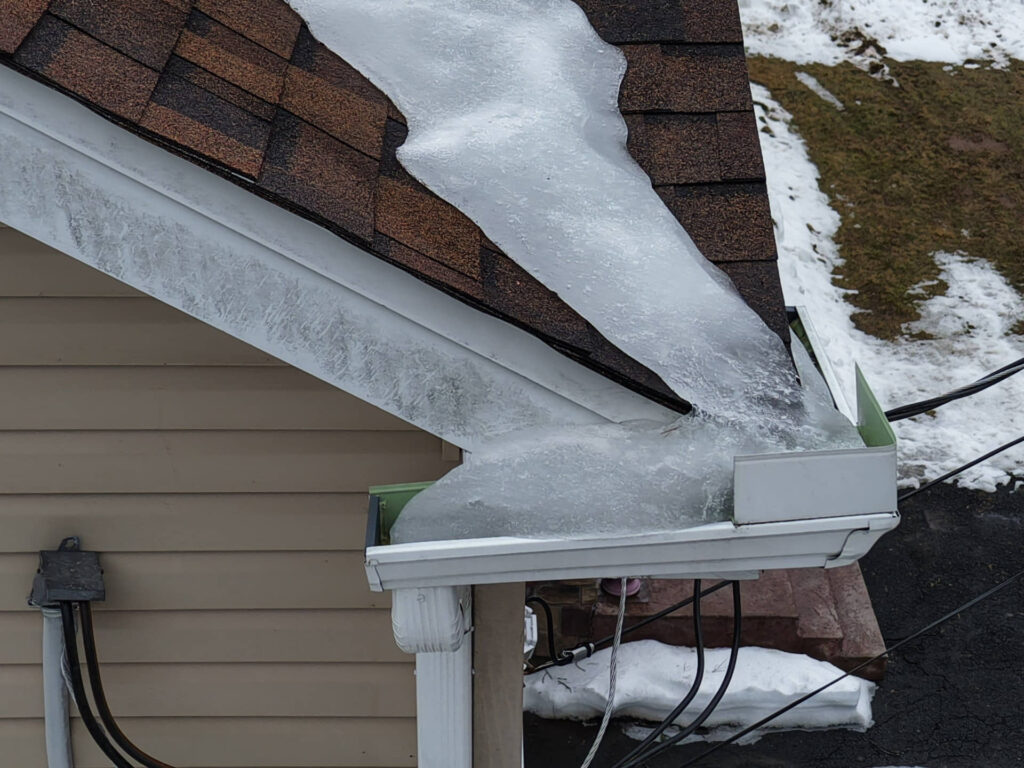
- Ice dams and large icicles at the eaves
- New interior stains, peeling paint, or damp attic areas
- Missing, curling, or cracked shingles after cold snaps
- Heavy, wet snow sitting on the roof for days
If you see more than one of these, you are likely dealing with early or active roof failure in cold climates and should schedule a professional inspection.
Why Northeast PA winters are hard on your roof
If you live in Stroudsburg or anywhere in the Poconos, you know winter is not just cold. It is a cycle of heavy, wet snow, sudden thaws, overnight refreezing, and wind. Those conditions are exactly what create the major signs of roof failure in cold climates.
Heavy, wet snow can weigh more than 20 pounds per cubic foot, and when storms come back to back the snow load on your roof can build without a chance to naturally shed, significantly increasing the risk of structural strain and failure (Ledegar Roofing). At the same time, repeated freeze thaw cycles force water into small gaps, then expand when it freezes, gradually prying apart shingles, flashing, and seams (ASIRFG).
Your goal is not to become a roofing expert. Your goal is to recognize warning signs early enough that you can address them with a targeted repair instead of a rushed, full replacement in the middle of winter. The sections below walk you through exactly what to look for and when replacement is actually on the table.
Structural warning signs you should never ignore
Structural issues are the clearest and most urgent signs of roof failure in cold climates. These do not mean you will always need full replacement, but they do mean you should treat the situation as time sensitive.
Sagging or uneven roof lines
In winter, your roof should still appear straight and even from the ground. If you notice dips, waves, or sagging areas, especially after heavy snow, that suggests your roof structure is under stress.
- Sagging or uneven roof surfaces indicate compromised structural integrity that can lead to catastrophic failure under the weight of wet snow, which can weigh about 20 pounds per square foot (NAR).
- Sagging or uneven roof lines after storms can also mean older trusses or roof decking are bowing and need prompt inspection before further loading occurs (GP Martini Roofing).
If you see any sagging, do not climb on the roof to investigate. Stay on the ground, keep people away from that side of the house, and call a professional promptly.
Excessive snow load on low or flat areas
Snow that piles up on low slope sections, porch roofs, or additions can become a serious structural issue in Northeast PA.
- Snow accumulation on flat roofs adds significant weight and stress and, if not removed, can lead to damage or collapse in cold climates (ASIRFG).
- Warning signs of excessive snow load can appear before the roof looks concerning from the ground, which is why you should watch for interior clues like new cracks or doors sticking after storms (Ledegar Roofing).
When snow is clearly deep and heavy, safe removal using a roof rake from the ground is appropriate. Anything beyond that should be handled by professionals to avoid personal injury and accidental roof damage.
Ice dams, icicles, and what they are telling you
In the Poconos, ice dams are one of the most common and most misunderstood signs of roof failure in cold climates. They can be both a symptom of underlying issues and a cause of new damage.
How ice dams form in your climate
Ice dams form in northern climates when heat from your attic melts rooftop snow. The meltwater runs down to the colder edges of the roof, refreezes, and builds a ridge of ice that traps water behind it (National Weather Service Grand Rapids). Several days of melting during the day and refreezing at night make significant damage more likely because water has more time to work under shingles into the attic and walls (National Weather Service Grand Rapids).
Repeatedly, sources from Fargo to New Hampshire report the same pattern. Warm attic air plus snow on the roof leads to dams at the eaves and water intrusion under shingles, soffits, and walls if conditions persist (Professional Roofing Co., Fargo Roofing & Siding, Presidential Exteriors).
What to watch for outside
Not every icicle is a crisis, but some are clear warnings:
- Ice dams and icicle buildup on roof eaves indicate that melted snow is refreezing, backing up under shingles, and frequently leading to winter leaks (GP Martini Roofing).
- Ice dams forming along gutters signal insulation or ventilation issues that let warm air escape and melt snow unevenly on the roof (NAR).
- Large icicles and sagging gutters show that excess ice weight is straining gutters and fascia boards, which can pull away from the home and worsen drainage and roof edge damage (Professional Roofing Co.).
If you see continuous thick ridges of ice at the eaves paired with icicles and you also notice interior staining or dampness, you are not just dealing with a cosmetic issue. You are seeing evidence that water is already getting where it should not.
Interior clues: stains, dampness, and frost
Often, the first real indication of trouble is not outside on the roof surface. It is what you notice in your ceilings, walls, or attic once snow has melted or temperatures swing.
New stains and peeling paint
Any new discoloration that appears in winter or right after a thaw deserves attention.
- Interior leaks, damp patches, or water stains during winter signify that the roof’s protective barrier has been compromised and is allowing water into your home (NAR).
- Yellow or brown ceiling stains, bubbling paint, or damp spots in ceilings, walls, or attic spaces that show up after snow melts are visual indications of developing leaks (Professional Roofing Co.).
- Water stains or spots appearing in winter often indicate more advanced leaks with possible saturated insulation, mold, and even hidden electrical hazards behind surfaces (GP Martini Roofing).
A single small stain does not automatically mean you need a full replacement, but it does mean you should not wait until spring to investigate. Early repairs are almost always less expensive than dealing with structural and interior damage later.
Attic moisture and condensation
Your attic tells you a great deal about how your roof is performing in cold weather.
- Condensation or frost buildup in a cold attic shows that warm, moist air from the living space is leaking upward and meeting cold surfaces, which promotes wood rot, mold growth, and loss of insulation performance (GP Martini Roofing).
- Condensation within the roof structure itself can lead to rot, corrosion, and decreased insulation effectiveness in buildings in cold climates (ASIRFG).
If you safely access your attic, look for damp insulation, darkened or soft wood, frost on nails, or a musty smell when temperatures have been below freezing. These conditions are correctable, often with better ventilation, air sealing, and localized repairs, if you catch them early.
Shingle and surface damage after storms
Surface damage does not always require a full replacement. However, patterns of damage, especially after repeated winter events, can indicate your roof is nearing the end of its service life.
Missing, curling, or cracked shingles
Cold, wind, and freeze thaw cycles are hard on asphalt shingles commonly used on Poconos homes.
- Missing, cracked, or curling shingles before or during winter create openings for moisture, which then freezes and expands and causes further roof damage (NAR).
- Curling, cracking, or lifting shingles after cold snaps often mean nails have loosened and moisture is intruding, which raises the risk of leaks and underlayment damage (GP Martini Roofing).
- Freezing temperatures and heavy snow can make shingles brittle and more likely to crack, which leaves your roof vulnerable to leaks until repairs are completed in warmer conditions (Fargo Roofing & Siding).
If you only see limited damage in a small area, a qualified roofer can often repair that section. If you see recurring issues in multiple areas season after season, then your roof system as a whole may be approaching replacement territory.
Gutters, drainage, and frozen runoff
Your gutters are part of the roofing system. When they fail, water ends up where it is not supposed to go.
- Frozen gutters from debris and ice buildup can block drainage and increase the risk of water damage to the roof and fascia in cold winters (Fargo Roofing & Siding).
- Excessive icicles or gutter stress in winter indicate poor drainage and potential structural strain at the roof edges, which can worsen roofing problems if left unaddressed (NAR).
Keeping gutters clear every fall and spring helps reduce ice dam risk and cold weather damage, and this step is often enough to avoid more serious problems if the rest of the roof is still in good condition (Presidential Exteriors).
When you may need repair vs full replacement
You are probably reading this because you want to know whether your roof can be repaired or if you truly need a full replacement. This is where context matters: age of the roof, how many warning signs you see, and how quickly damage is progressing.
Below is a simple decision guide to help you frame the conversation with a roofer:
| What you see in winter | Likely path forward | Why |
|---|---|---|
| One small ceiling stain after a storm, otherwise sound shingles | Localized repair and possibly attic sealing | Limited evidence of system-wide failure |
| A few missing or cracked shingles in one area, no interior damage | Section repair and gutter maintenance | Surface issue, structure and underlayment may still be sound |
| Repeated ice dams in the same area plus recurring interior stains | Repair plus ventilation / insulation upgrades, replacement may be considered if roof is older | Indicates ongoing heat loss and moisture pathways |
| Multiple stains, widespread curling or brittle shingles, roof 20+ years old | Strong case for full replacement | System is aging and no longer protecting reliably in cold conditions |
| Sagging roof lines, heavy interior damage, or structural cracking | Immediate professional evaluation, likely major structural repair and often replacement | Structural risk under winter snow loads |
For a broader framework on deciding between repair and replacement, you can also review how to know if you need a roof replacement. Combine that guidance with the specific winter signs you see to make a more informed decision.
Reducing future winter damage in the Poconos
Even if you are not ready for a full replacement, there are practical steps you can take to reduce winter roof stress and extend the life of your current system.
Focus on three areas:
Attic insulation and ventilation
Improving attic ventilation with soffit and ridge vents, adding appropriate insulation, and sealing air leaks around lights, pipes, and chimneys can significantly lower ice dam risk and reduce cold weather roof damage (Presidential Exteriors).Routine cleaning and pre winter inspections
Keeping gutters clear and scheduling a roof check before winter lets you catch missing shingles, weak flashing, or minor leaks before heavy snow amplifies them.Choosing better materials when you do replace
When replacement is necessary, modern cold climate shingles provide more resilience. For example, some shingles use rubberized asphalt to improve all weather performance, tear strength, and granule adhesion in harsh winter conditions (Malarkey Roofing). Others incorporate impact resistant technology and enhanced sealants to help shingles stay fastened and resist hail and high winds typical of storm prone northern regions (Atlas Roofing).
These choices are not about upselling. They are about matching your next roof to the real conditions it will face in Northeast PA over the next several decades.
A simple winter roof check checklist
Use this quick checklist at least once mid winter and once after a major thaw. Perform all checks from the ground or from inside your home.
- Look at roof lines from a distance for any new sagging or uneven areas
- Scan shingles for obvious bare patches, missing, or curled shingles
- Check eaves for continuous ice ridges and large, heavy icicles
- Inspect gutters from below for pulling, bending, or visible ice blocks
- Walk through each room and check ceilings and upper walls for new stains or peeling paint
- Safely look into the attic for damp insulation, frost on nails, or musty odor
If you check several of these boxes, you are likely seeing meaningful signs of roof failure in cold climates rather than isolated winter quirks. At that point, an honest inspection and clear estimate will give you more clarity than waiting to see if things worsen.
You do not have to guess between repair and replacement. By paying attention to these specific winter warning signs, you put yourself in a position to act early, protect your home, and make a replacement decision on your schedule instead of in an emergency.