
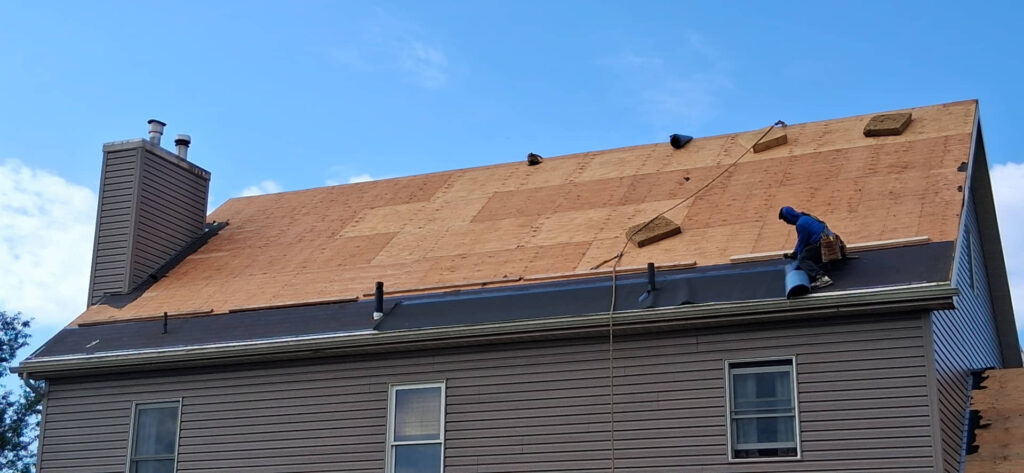
You may think the hard part of a roof replacement is picking shingle colors. In reality, preparing your home for roof replacement has just as much impact on how quickly, safely, and cleanly the project goes, especially in the Poconos where steep roofs, trees, and sudden storms are common.
Below is a practical guide to help you get ready, reduce stress, and protect your property when it is time to replace your roof in Stroudsburg or anywhere in the greater Pocono region.
TL;DR: Preparing your home for roof replacement
- Start planning 4 to 6 weeks ahead of your scheduled date
- Clear your driveway, decks, and yard so crews can work and debris can fall safely
- Protect fragile items inside, and expect loud noise and some vibration
- Arrange plans for kids and pets, and give neighbors a heads up
- Walk the property with your contractor before and after for expectations, cleanup, and warranty details
Decide if you really need a full replacement
Before you think about dumpsters, tarps, and moving patio furniture, you should be confident that you actually need a full roof replacement and not just targeted repairs.
In the Poconos, you face:
- Heavy snow loads and ice dams in winter
- High winds, hail, and fast moving thunderstorms in spring and summer
- Constant moisture that can accelerate shingle aging and moss growth
These conditions can make a roof look worse than it is, or hide serious structural issues under the surface. If you are unsure, start by reviewing guidance on how to know if you need a roof replacement so you can walk into an inspection with clear expectations.
You should then get a professional assessment. Reputable contractors in our region will look at ventilation, decking, flashing, and attic moisture, not just the shingles. If you feel pushed toward a replacement without clear evidence, ask more questions. This is your cue to get a second opinion, not to sign a contract.
Understand how long your roof replacement will take
Once you know a full replacement is appropriate, timing is your next concern. Fortunately, for most typical Pocono homes the actual tear off and install is fast.
- For homes under roughly 2,500 square feet, the average roof replacement takes only 1 to 2 days, and often just a single day, with a professional crew as of April 2023 (Bondoc Roofing).
- Smaller homes under 1,000 square feet are frequently completed in one day, while large or complex roofs over 2,500 to 3,000 square feet can take 3 to 4 days or more, especially if multiple valleys, steep pitches, or difficult access are involved (Bondoc Roofing).
In the Poconos, there is another variable you cannot ignore: weather. Sudden rain or storms will delay work, and a professional crew will tarp and secure your home, then resume when conditions are safe (Bondoc Roofing).
You should plan for the project to be loud and somewhat disruptive while work is happening. It is usually short lived, but those one to three days will not feel like a normal week at home.
Start planning 4 to 6 weeks before installation
You do not need to overhaul your entire life, but you should give yourself enough lead time to make organized decisions.
According to roofing manufacturer guidance, homeowners should begin preparing 4 to 6 weeks before the scheduled installation date to keep the project on track and allow time for material delivery and contractor logistics (Owens Corning).
During this window you should:
- Finalize materials, colors, and underlayment choices
- Confirm what the quote actually includes, such as tear off, disposal, ventilation upgrades, and flashing
- Review warranties and clarify who is registering them, you or the contractor, so your coverage is active after the job is complete (Owens Corning)
- Ask how your contractor protects landscaping, siding, and walkways, and how they handle cleanup and magnetic nail sweeps
The more you clarify now, the fewer surprises you will have while your roof is open to the Pocono sky.
Prepare the exterior of your property
On installation day, your roof becomes a work zone. Old shingles, nails, and packaging will be removed, and materials need a clear path to the roof and to the dumpster. A bit of preparation on your part goes a long way.
Clear your driveway and plan vehicle parking
Your driveway is usually where the crew will park trucks and place a dumpster. Roofing pros commonly work from the roof toward the dumpster and use tarps to guide debris, then use magnets or metal detectors to collect nails, although a visual inspection is still needed for shingle scraps (IKO).
You should:
- Move vehicles out of the driveway and garage
- Discuss with your roofer where to park your vehicles on the street or at a neighbor’s property to avoid damage and keep access open for the crew (DryHome Roofing & Siding)
Protect decks, patios, and yard items
Anything directly below roof edges is at risk from falling debris. Manufacturers and contractors recommend that you clear the areas where roofers will walk and where debris may fall (IKO).
You should move:
- Patio furniture, grills, and planters away from the house
- Toys, lawn equipment, and décor out of work paths
- Hanging baskets or delicate items on porches and decks into the garage or shed
If something is too large to move, ask your contractor to cover it, and confirm whether they will protect plants, flowers, and shrubbery or if you should do so yourself a few days before work begins (Owens Corning).
Plan for pets and neighbors
Roof replacement is loud. There will be hammering, compressors, and people on your roof. Guidance from roofing manufacturers suggests that arranging for children and pets to be away from home, such as at a neighbor’s house or a playdate, can reduce stress during the noisiest periods (IKO).
You should also:
- Make provisions so outdoor pets are secure and not underfoot or frightened during the project (DryHome Roofing & Siding)
- Notify neighbors a few days in advance so they are not surprised by trucks and noise (Owens Corning)
A brief conversation now can prevent tension on installation day.
Prepare the inside of your home
When a crew is removing shingles and nailing down new ones, vibrations travel through your framing. You might not see it from the ground, but inside your home you will feel and hear it.
Roofing experts note that these vibrations can cause short term mess and disruptions, but they do not usually cause long term damage if the structure is sound (IKO). Still, it is smart to protect your belongings.
Secure fragile items and wall décor
Before work starts, you should:
- Take fragile pictures, mirrors, and decorations off walls, especially on upper floors and under roof slopes (DryHome Roofing & Siding, Fortified Roofing)
- Move delicate items from high shelves to lower, more stable surfaces
- Cover items in the attic with plastic sheeting or old sheets to catch dust and small debris that can fall through gaps
If you work from home, plan for noise. This is not the day to schedule video conferences or quiet calls, especially if the roofers will be directly above your office.
Coordinate materials, warranties, and what gets installed
Not all shingles and roofing systems are created equal, which matters in a region with heavy snow, ice, and hail risk like the Poconos. Preparing your home for roof replacement is also about preparing the specifications of what will be installed.
Verify materials on delivery
When materials arrive, quick checks on your part help avoid mistakes that only show up after installation. Roofing experts recommend inspecting delivered materials to make sure they match what you ordered and what is listed on your contract (Fortified Roofing).
Confirm:
- Brand and product line of shingles
- Color and style
- Underlayment type
- Any specialty components like ice and water shield or ventilation upgrades
Choose shingles that fit Pocono conditions
Local climate should guide your material choices. For example:
- Malarkey shingles, made from rubberized asphalt with upcycled rubber and plastics, provide enhanced all weather resilience and divert waste from landfills, while offering up to 50 percent more adhesive bonds and double the rain seals compared to standard shingles (Malarkey Roofing). They also exceed industry standards for tear strength and granule adhesion, which supports durability in harsh conditions (Malarkey Roofing).
- Atlas StormMaster Shake shingles with Core4 Technology provide Class 4 impact resistance and a warranty against 150 mph winds, a strong fit if you are concerned about hail and severe storms (Atlas Roofing).
- Atlas Pinnacle lines, such as Pinnacle Pristine and Pinnacle Sun, combine impact resistance, wind resistance up to 130 mph, and algae protection, and in the case of Pinnacle Sun, cool roof technology to reflect radiant heat (Atlas Roofing).
Discuss these options with your contractor so you are not only replacing your roof, but improving its performance for the next several decades of Pocono weather.
Set clear expectations for protection and cleanup
A good contractor will protect your property from the start, however you should still clarify details so you know what to expect and what is your responsibility.
Before work begins
Have a brief walk through and ask:
- How will landscaping, siding, and windows be protected
- Where will materials be stored and stacked so they do not damage grass or hardscapes (DryHome Roofing & Siding)
- What time crews will arrive and leave each day
- Who your point of contact is if you have a concern during the project
Homeowners are advised to discuss whether plants and shrubbery will be covered by the crew or if you should protect them yourself a few days before installation (Owens Corning).
After the roof is installed
You should expect a thorough cleanup. Roofing manufacturers and contractors specify that professionals should remove debris from your yard and property and perform nail sweeps before leaving the site to ensure safety and cleanliness (IKO).
You can also:
- Ask how many times they sweep for nails and what tools they use
- Request a secondary sweep for nails and debris if you are not satisfied with the first pass (Owens Corning)
- Walk the property with the crew leader to inspect the roof from the ground and review any remaining questions
This is the best moment to confirm warranty paperwork, final invoice details, and recommended maintenance schedules. Many experts recommend annual inspections after installation to extend the lifespan of your new roof and catch minor issues early (Fortified Roofing).
Simple pre‑installation checklist
Use this brief checklist in the week before your scheduled date to make sure you did not miss anything:
- Vehicles moved from driveway and garage
- Patio furniture, grills, toys, and yard décor moved away from the house
- Plants and shrubs near the home covered or protected
- Wall hangings, photos, and fragile items removed or secured
- Attic and upper rooms covered to catch dust
- Kids and pets have a safe, quieter place to stay during work hours
- Neighbors informed about the project dates
- Material delivery inspected and matched to your contract
- Cleanup and nail sweep expectations confirmed with your contractor
- Warranty registration responsibilities clearly assigned
Preparing your home for roof replacement is not complicated when you break it into steps. By planning several weeks ahead, protecting the areas where crews will work, and clarifying expectations with your contractor, you protect your investment and keep disruption to a minimum while your new roof is installed over your Pocono home.